
Is there any connection between science and South West Scotland? My undergraduate students are often surprised to discover how long the methods of science have been practised by communities in this region, and how far afield the connections have extended.
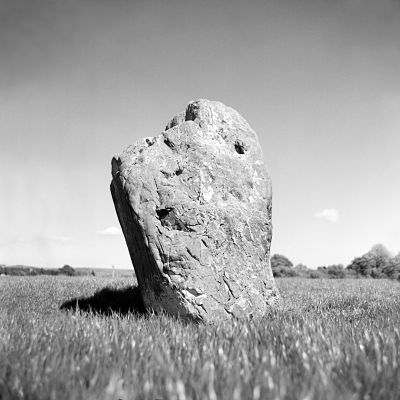
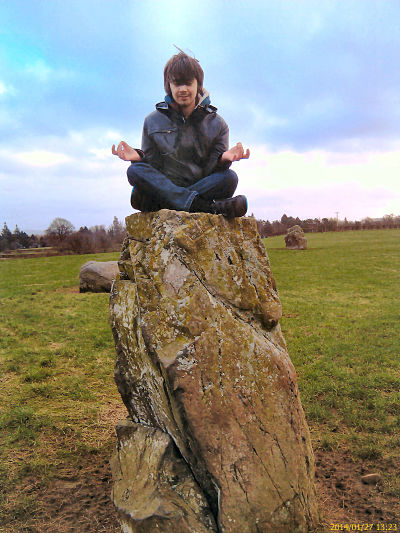
Science-related activities in Dumfries and Galloway have always combined the regional and the remote. Some four thousand years ago, for example, a Neolithic community erected the Twelve Apostles stone circle at Holywood. Mirrored across prehistoric Europe, such structures united careful astronomical observations and social purpose for early farmers.
In the Middle Ages, Johannes Sacrobosco, or ‘John of Holywood’ (yes, probably the same Holywood), was the abbot of a nearby religious community. He, too, linked the sky and science, combining Arabic mathematics, Greek science and local observations. Later a professor at the University of Paris, Sacrobosco wrote De sphaera, the most popular textbook on astronomy over the next three hundred years.
A different case of scientific zeal – although today recognised as ‘pseudo-science’ – surrounded the disinterment of the remains of Robert Burns in 1834. Local phrenologists sought to rationally assess thirty-five discrete intellectual traits of the national poet by measuring his skull. They deemed their project a success: a Dumfries Phrenological Society was founded seven years later, and a copy of the cranial cast can still be viewed at the Robert Burns Centre in town.
By the twentieth century, science in the region was more tightly coupled to modern concerns. During the First World War, the largest explosives works in the world was built at Gretna. Straddling the Scottish-English border, the facilities attracted chemists from around the British Empire. The streets of Eastriggs, the township created to house them, still bear the names of their cities of origin, including Vancouver, Brisbane, Delhi, Pretoria and Dunedin. For tens of thousands of women working there, the practical chemistry was their first experience of paid employment.
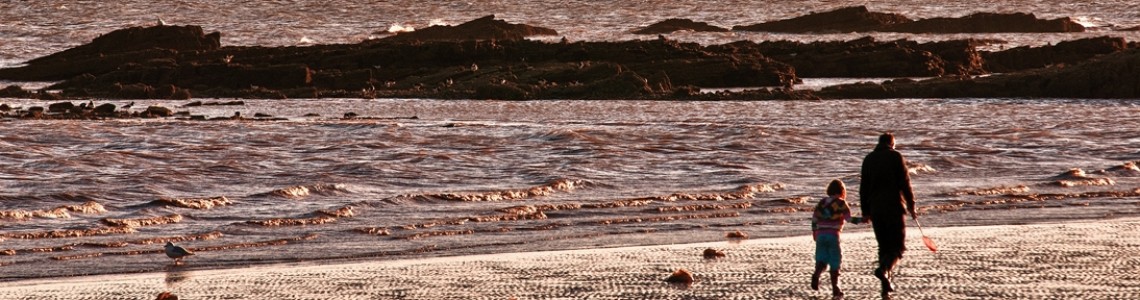
Of equal impact was the first nuclear power reactor in Scotland, and one of the first in the world. As the highest of high-tech industries from the late 1950s, Chapelcross workers pioneered the application of scientific discoveries made scarcely a decade or two earlier. And in subsequent years, the Solway Firth became the laboratory for detecting radiation that went inadvertently astray from the reactor’s older sibling at Sellafield, some fifty miles south.
These examples hint at how curiosity, problem-solving and social life have been entwined. Groups and individuals in South West Scotland have laboured systematically to observe, explain and improve (or control) their world. These essential ingredients of science and technology extend back to the early inhabitants of this region some two-hundred generations ago.
Similar motivations inspired thousands in the region to witness the solar eclipse last March, and bring visitors to the Galloway Forest Dark Sky Park to experience celestial phenomena first-hand. Others take part in wildlife surveys; experiment with wind-power systems; use their computers for collaborative projects such as the Search For Extra-Terrestrial Intelligence (SETI), or contribute weather data to international networks.
All of these activities are relevant to a flourishing research theme at the campus: how do everyday people express their technological enthusiasms and practise amateur science? It also motivates this blog entry and some open questions. What motivates such active participation? How can experts and novices interact better? And how might others, young and old, be inspired to take part?
How do you channel your curiosity about the natural world? How could it be improved?
Sean Johnston, Professor of Science, Technology and Society at the University of Glasgow, sean.johnston@glasgow.ac.uk
Links
- Combe (1834),‘Phrenological development of Robert Burns’, available at http://www.gutenberg.org/files/30489/30489-h/30489-h.htm
- Pederson (1985), ‘In quest of Sacrobosco’, Journal for the History of Astronomy 16 (3), 175-220. Available at http://articles.adsabs.harvard.edu/full/1985JHA….16..175P
‘The Devil’s Porridge Museum’, http://www.devilsporridge.org.uk/
Forestry Commission Scotland (n.d.), ‘Dark skies in Galloway Forest Park’, http://scotland.forestry.gov.uk/forest-parks/galloway-forest-park/dark-skies